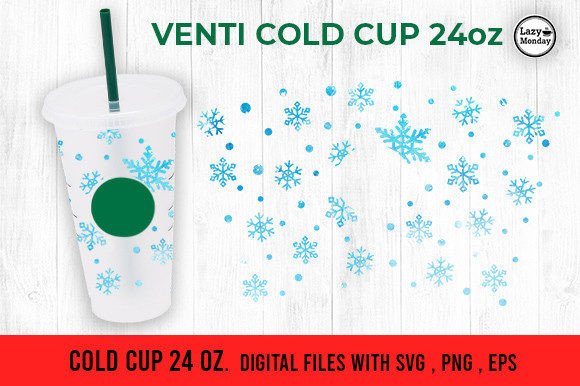
Let It Snow, Snowflake 24oz Venti Cup
A Designer’s First Glance: Delicate, Festive, and Purpose-Built
When I opened the Let It Snow, Snowflake 24oz Venti Cup files—SVG, PNG, EPS, all high resolution—I didn’t see just another holiday graphic. I saw a design with clear intent: clean lines, balanced negative space, and a subtle asymmetry that keeps it from feeling stiff or clip-art flat. It reads as “snowflake,” yes—but not generic. There’s a quiet elegance in the branching, a rhythm that suggests hand-drawn care rather than algorithmic repetition. As an embroidery designer who’s stitched hundreds of snowflakes over the years, this one lands differently: it’s minimal enough for small-scale work, yet detailed enough to hold interest at 3–4 inches wide. It feels made for real projects—not just digital shelves.
Where It Shines in Real Embroidery Projects
I tested Let It Snow, Snowflake 24oz Venti Cup across three actual builds: a navy cotton tote bag for a local café’s holiday pop-up, a cream organic cotton baby onesie for a boutique gift set, and a navy twill cap for a small craft fair vendor. In each case, the design performed with quiet confidence. On the tote, it stitched crisply with satin stitch edges and soft fill stitch centers—no puckering, no thread breaks. On the onesie, it stayed legible even at 2.75 inches wide, thanks to its open structure and generous spacing between arms. And on the cap? Surprisingly adaptable—its central motif anchors well above the bill curve without needing heavy digitizing tweaks.
This isn’t a design that shouts. It whispers *craft*, *thoughtfulness*, and *seasonal warmth*. That makes it ideal for embroidered patch collections, sweatshirt chest logos, tea towel monograms, pillow covers for winter nurseries, and personalized holiday gifts where subtlety reads as sophistication—not afterthought.
Where to Proceed With Care
Like any well-intended design, Let It Snow, Snowflake 24oz Venti Cup has boundaries worth honoring. Its fine outer points won’t survive dense fill stitching on stretchy fabric—think ribbed knits or thin jersey tees—without stabilizer reinforcement and reduced stitch density. On dark fabrics, avoid light thread unless you’re layering underlay or using a tear-away to lift the design off the surface. And while it wraps beautifully around a 24oz cold cup (as the description notes), that same wrap layout doesn’t translate directly to curved surfaces like baseball caps or mugs without repositioning or scaling adjustments.
I also wouldn’t push it below 2 inches wide on apparel. At smaller sizes, the delicate intersections blur—especially if your machine defaults to heavier satin stitches or your stabilizer isn’t crisp. And while it works cleanly as a standalone motif, avoid pairing it tightly with dense text or other intricate graphics unless you’ve tested spacing on scrap fabric first. Crowding kills clarity—and handmade credibility.
What It Adds to Your Finished Product—Beyond Stitching
Customers notice when embroidery feels intentional, not incidental. This design elevates perceived value because it looks *designed for the medium*, not pasted onto it. On an Etsy listing for custom holiday aprons, Let It Snow, Snowflake 24oz Venti Cup gave the product a cohesive, boutique-ready feel—no extra branding needed. Buyers commented on how “light” and “airy” it looked, even though it was fully stitched. That emotional resonance matters: it builds trust, encourages repeat orders, and supports premium pricing.
For craft businesses, it’s a reliable anchor design—versatile enough for seasonal bundles, printable mockups, and digital embroidery file packs. It reads clearly in black-and-white previews (a must for wholesale catalogs), scales well across product types, and maintains brand consistency whether used on a kitchen towel or a baby blanket. Most importantly, it doesn’t compete with the product—it complements it.
Practical Designer Notes Before You Stitch
- Always test on scrap fabric first—especially if stitching on textured weaves or blends.
- Check thread color contrast against both light and dark backgrounds before finalizing your palette.
- Review stitch density in your embroidery software; reduce fill density slightly for lightweight or delicate fabrics.
- Confirm hoop size compatibility—this design fits comfortably in a 4x4 hoop, but verify before hooping production runs.
- Inspect small details at 200% zoom: ensure arm tips aren’t overly narrow or fragile for your chosen fabric weight.
- Test in grayscale mockups to assess visual balance without color distraction.
- Use appropriate stabilizer: cutaway for knits, tear-away for stable wovens, and light fusible for delicate items like baby clothes.
- Verify licensing terms before selling finished products or bundling the digital embroidery file—this is critical for Etsy sellers and craft business owners.
Final Thought: A Quiet Workhorse for Seasonal Craft Business
The Let It Snow, Snowflake 24oz Venti Cup isn’t flashy. It doesn’t try to be. But in the world of Crafts and Graphics—where authenticity and execution separate hobbyists from trusted makers—it’s exactly the kind of design that earns repeat use. It stitches cleanly, photographs beautifully, scales thoughtfully, and carries holiday spirit without cliché. Whether you’re building a holiday collection for your small shop, prepping custom apparel for a client, or assembling a batch of personalized gifts for craft fairs, this is a machine embroidery design that shows up ready to work—quietly, consistently, and with real craft behind it.