Spooky Trees Cup Wrap
A Designer’s First Glance: Moody, Minimal, and Made for Movement
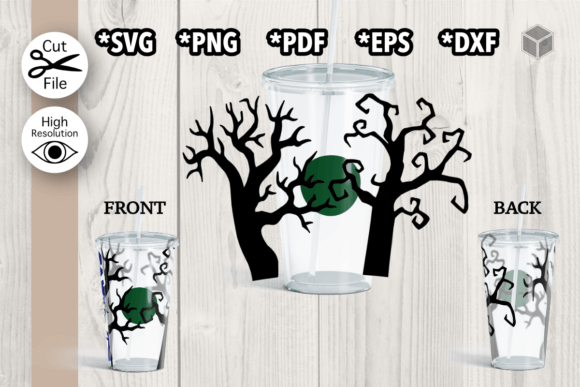
When I opened Spooky Trees Cup Wrap, my first thought wasn’t “cute” or “trendy”—it was “this feels like a forest breathing.” The silhouette-based layout—tall, lean trees with jagged, uneven canopies—creates instant atmosphere without relying on dense detail. It’s not cartoonish or overly polished; it leans into negative space and rhythmic repetition, which is exactly what makes it work so well as a machine embroidery design for curved, narrow surfaces like a 24 oz cold cup. As a designer who regularly tests embroidery files for real client work, I immediately pictured it stitched onto a charcoal gray insulated tumbler—clean, confident, and quietly unsettling in the best way.
Where It Shines: From Boutique Merch to Personalized Gifts
I recently used Spooky Trees Cup Wrap as the centerpiece for a small-batch run of embroidered tote bags for a local indie bookstore’s Halloween pop-up. Because the design is built for a vertical wrap (9.91 inches wide), scaling it down slightly kept proportions intact while fitting neatly along the side seam of a medium canvas tote. The result? A cohesive, boutique-ready look that felt intentional—not like a sticker slapped on fabric. It performed just as well on a heavyweight cotton sweatshirt, where the tree trunks held crisp definition in satin stitch and the canopy areas used open fill stitch to avoid stiffness. For Etsy sellers and craft fair vendors, this is a rare find: a digital embroidery file that reads clearly at multiple scales, supports subtle thread color shifts (think charcoal grey trunks + deep moss green foliage), and doesn’t overwhelm the garment.
It also translated beautifully to baby embroidery—on a soft organic cotton onesie, using lightweight tear-away stabilizer and reduced stitch density, the trees read as gentle silhouettes rather than eerie. That versatility matters: whether you’re making holiday embroidery for a themed kitchen towel, custom apparel for a haunted house volunteer crew, or personalized gifts for a goth wedding, Spooky Trees Cup Wrap adapts without losing its voice.
Where to Pause: Texture, Curve, and Context Matter
This isn’t a one-size-fits-all embroidery file—and that’s a good thing. On stretchy fabrics like ribbed knit caps or thin jersey tees, the tall vertical lines can distort if hooping isn’t precise or stabilizer isn’t layered correctly. I recommend testing on scrap first, especially when stitching over seams or curved edges (like the base of a baseball cap). The design’s strength lies in its clean outlines and consistent rhythm—not tiny details—so avoid pushing it into tight hoop sizes under 4x4 inches unless you’re willing to simplify branches manually.
Dark fabric works exceptionally well (the contrast reinforces the “spooky” mood), but on light backgrounds, check your thread colors carefully: a pale grey thread on ivory linen can disappear. Also, avoid layering this over busy prints or heavily textured weaves—Spooky Trees Cup Wrap needs breathing room to land its visual punch. As a graphics asset, it’s designed for clarity, not clutter.
Real-World Impact on Your Craft Business
Customers notice intentionality. When someone sees a cleanly stitched Spooky Trees Cup Wrap on a handmade tumbler or apron, they don’t just register “Halloween”—they register care, consistency, and professional execution. That builds trust faster than any listing description. For small shop owners and Etsy sellers, this design elevates perceived value: it’s not generic clip art; it’s a considered graphic template with built-in rhythm and spacing. Used across a product line—say, matching tea towels, pillow covers, and embroidered patches—it creates subtle brand cohesion for seasonal collections.
Practical Designer Notes You’ll Actually Use
- Always test on scrap fabric first—especially with textured or dark materials—to confirm stitch density and thread coverage.
- Review the design in black-and-white mockups before finalizing thread colors; grayscale reveals contrast issues invisible on screen.
- Use cutaway stabilizer for stable fabrics (denim, canvas) and lightweight tear-away for knits and baby items.
- Check how corners and ends align on curved surfaces—Spooky Trees Cup Wrap flows well, but minor adjustments may help on tapered tumblers or mugs.
- Confirm licensing terms before selling finished products or bundling the file with other design assets. This is a Graphics category item, so commercial use permissions vary by seller.
- If adapting for applique design, leave 1/8-inch seam allowance around trunks—the negative space between trees already supports clean edge finishes.
Final Thought: Less Is Spookier
In an era of over-digitized, hyper-detailed machine embroidery designs, Spooky Trees Cup Wrap stands out by trusting the viewer’s imagination. It doesn’t need bats, cobwebs, or glowing eyes to feel atmospheric. That restraint is its greatest strength—and why it works so well across embroidered patches, sweatshirt embroidery, nursery decor, and even minimalist holiday embroidery. As a designer who evaluates hundreds of digital embroidery files each year, I keep coming back to this one not because it’s flashy, but because it’s functional, flexible, and quietly memorable. Whether you’re building a craft business, prepping for a holiday market, or stitching a personalized gift, Spooky Trees Cup Wrap earns its place in your working library—not as filler, but as foundation.